
Drag & Drop image files here or click to upload
Merge JPG to JPEG in seconds. Upload your JPG images, pick a merge direction, and download a single combined JPEG file no software to install, no account to create, no cost. Whether you’re combining two photos or merging an entire batch of scanned pages, this tool handles it all directly in your browser.
JPG and JPEG are the same format the names are interchangeable. What matters is getting multiple separate image files joined into one clean, high-resolution output. That’s exactly what this tool does. Fast, free, and no technical knowledge required.
How to Merge JPG Images into One JPEG File
The process takes three steps and under a minute.
1 — Upload Your JPG Images
Click the upload area or drag and drop your JPG files directly onto the page. You can select a single pair of images or upload a larger batch to merge all at once. There’s no cap on how many files you can add, so whether you’re combining two product photos or joining twenty scanned document pages, the tool handles it in one go.
Supported input: JPG and JPEG files. Make sure your images are in good resolution before uploading — the output quality reflects what goes in.
2 — Choose Your Merge Direction
Once your files are uploaded, select how you want them combined:
- Horizontal merge — images are placed side by side, left to right. Best for comparing images, creating wide banners, building photo strips, or producing before-and-after layouts.
- Vertical merge — images are stacked top to bottom. Best for long screenshots, combining scanned pages, creating tall social media graphics, or assembling multi-panel product shots.
You can reorder your uploaded images before merging to control exactly how the final JPEG is arranged. Drag to reorder, then confirm your layout.
3 — Merge and Download Your JPEG
Click the Merge Images button. The tool processes all uploaded JPG files instantly and stitches them into a single seamless image. Within seconds, your combined file is ready. Click download and save your merged JPEG directly to your device — no email required, no waiting, no redirect to a paywall.
The output is a standard JPEG file (.jpg) compatible with every device, platform, browser, and image editor.
Why Use This Tool to Merge JPG to JPEG?
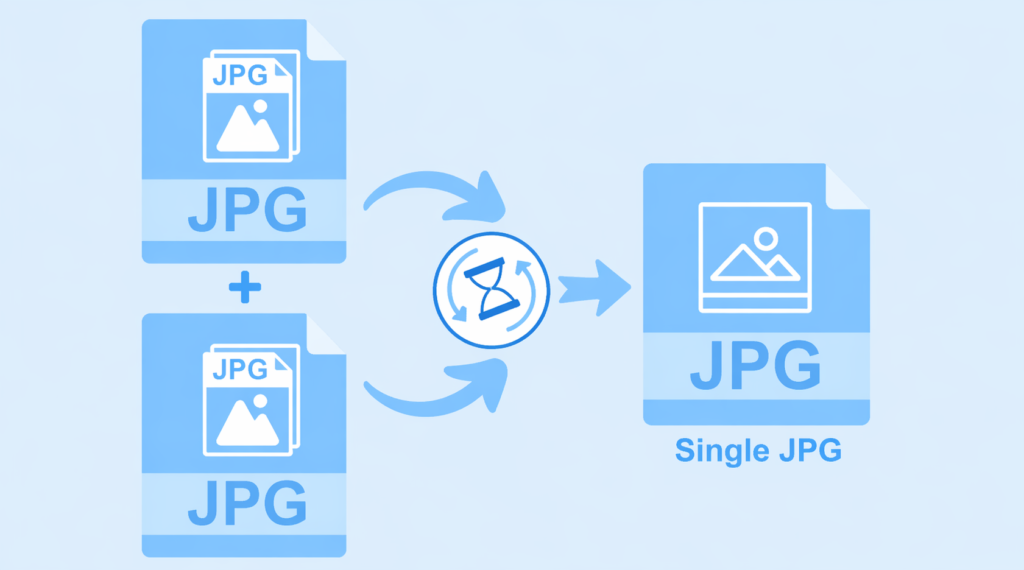
There are a dozen ways to combine images Photoshop, Paint, online editors, mobile apps. Most of them are either overkill for a simple merge task, behind a subscription, or require an account just to download your file. This tool exists because merging JPG to JPEG should take thirty seconds, not thirty minutes.
Here’s what makes it worth bookmarking:
Free with no strings attached. No trial period. No watermarks on your output. No credit card required. The tool is free to use every time, for any number of sessions.
No installation. It runs entirely in your browser. Nothing to download, no extensions to install, no software to update. Works on Windows, Mac, Linux, Android, and iOS.
No sign-up required. Open the page, upload files, merge, download. Your session is yours — no account creation, no email confirmation, no marketing follow-ups.
Handles multiple images at once. Most basic image merging tools only support two files at a time. This tool lets you upload and merge as many JPG images as you need in a single pass — saving time when you’re combining full sets of scanned pages, product catalog images, or photo sequences.
High-quality JPEG output. The merged file is exported at high quality in standard JPEG format — sharp, clean, and immediately usable. No compression artifacts introduced by the tool itself.
Private and secure. Your images are processed within your browser session. They are never uploaded to a third-party server, never stored, and never shared. Once you close the tab, the files are gone.
What Is the Difference Between JPG and JPEG?
None. JPG and JPEG refer to the same image format Joint Photographic Experts Group compression. The difference is historical: early Windows systems limited file extensions to three characters, so jpeg was shortened to jpg Mac and Unix systems kept the full jpeg extension. Today, both extensions open the same type of file and are treated identically by every major operating system, browser, and image application.
When this tool merges JPG to JPEG, it’s combining your .jpg image files into a single .jpeg output same format, different extension label. The output is universally compatible regardless of what you call it.
Common Use Cases for Merging JPG to JPEG
Combining Scanned Documents
Scanners typically output one JPG file per page. If you’ve scanned a multi-page form, contract, receipt bundle, or report, you end up with a folder full of individual image files. Merging them vertically into a single JPEG creates one clean document image you can share, attach, or archive without sending a zip file.
Creating Image Collages
Arrange multiple photos into a single JPEG collage without needing a design app. Upload your selected JPGs, choose horizontal or vertical layout, and merge. The result is a single image you can post directly to social media, embed in a document, or send in a message. For more advanced collages of JPEG with custom grids, dedicated collage tools offer more layout flexibility — but for a clean, quick combine, this merger handles it in seconds.
Long Screenshots
When capturing a full webpage, a long chat thread, or a scrollable interface, you often end up with several overlapping screenshots. Stack them vertically with this tool and you get one continuous image that shows the entire screen from top to bottom — no gaps, no overlaps when aligned correctly.
Before-and-After Comparisons
Place two images side by side in a horizontal merge for a clean before-and-after layout. Useful for fitness progress photos, design revisions, product comparisons, photo editing showcases, or renovation reveals. One combined JPEG is easier to share and harder to separate than two individual files.
Product Photography for E-Commerce
Online sellers often need to display multiple product angles in a single image — front, back, side, and detail shot. Merging these into one horizontal JPEG lets you show more in a single listing image slot, especially on platforms that limit the number of photos per listing.
Social Media Graphics
Tall vertical merges work well for Pinterest pins, Instagram stories, and other portrait-format platforms. Wide horizontal merges suit Twitter headers, Facebook banners, and LinkedIn cover images. Merge your JPGs into the shape you need and download a ready-to-upload JPEG.
Photo Strips
Combine portrait-style photos in a vertical sequence for a classic photo strip layout — perfect for events, parties, weddings, or keepsake prints. No app required, just upload and merge.
Tips for Getting the Best Results When You Merge JPG to JPEG
Match image dimensions before merging. For horizontal merges, images with the same height produce cleaner results. For vertical merges, match the width. Mismatched dimensions create uneven edges crop or resize first if alignment matters.
Order your files before clicking merge. Drag to reorder your uploaded images into the sequence you want. The tool merges left to right (horizontal) or top to bottom (vertical) in the order they appear in the upload list.
Use high-resolution source images. The output JPEG quality reflects your inputs. If you’re merging compressed or low-resolution JPGs, the final file will reflect that. For print-quality output, use the highest resolution versions available.
Keep file sizes reasonable. Very large image files (20MB+) may take slightly longer to process depending on your device and browser. For most standard photo and scan sizes, processing is near-instant.
Check alignment after merging. Download the file and open it before deleting your originals. If the alignment looks off, adjust your source image dimensions and re-merge.
FAQs — Merge JPG to JPEG
How do I merge JPG images into one JPEG file?
Upload your JPG files, choose horizontal or vertical merge direction, then click “Merge Images.” The tool combines all selected files and provides a single downloadable JPEG output.
Is this tool free?
Yes. Completely free, with no usage limits, no watermarks, and no account required.
Can I merge more than two JPG images at once?
Yes. Upload as many JPG files as you need and merge them all in a single session.
What format is the output?
The merged file is exported as a high-quality JPEG (.jpg) — compatible with every device, platform, and image editor.
Are my images safe?
Yes. Images are processed in your browser only. They are never stored on a server, never shared, and never accessible after your session ends.
Does it work on mobile?
Yes. The tool runs in any modern mobile browser on iOS and Android — no app download required.
Can I control the order of the merged images?
Yes. Reorder your uploaded images before clicking merge to control the final layout sequence.
What’s the difference between horizontal and vertical merge?
Horizontal places images side by side. Vertical stacks them top to bottom. Choose based on your intended output — wide layouts use horizontal, tall layouts use vertical.
Merge JPG to JPEG — Start Now
No sign-up. No software. No cost. Upload your JPG images above, select your merge direction, and download a single combined JPEG file in seconds. Built for anyone who needs to combine images quickly without the overhead of a full image editor.
Want to be notified when Claude responds?Notify